Monalisa: The Friendly Handwritten Font for Every Project
Understanding the Monalisa Typeface
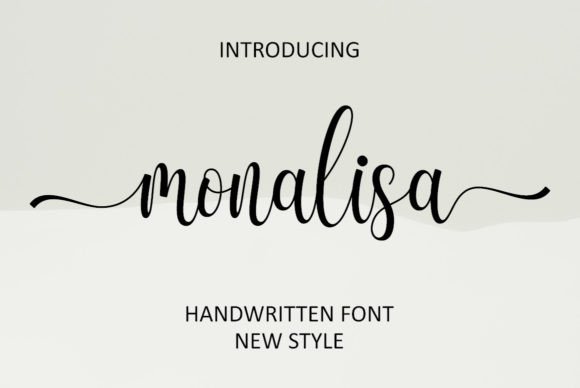
Monalisa is a handwritten font that balances casual charm with professional clarity. Its strokes mimic natural handwriting without sacrificing legibility, making it a versatile choice for both personal and commercial applications. The font features slightly uneven baselines and organic curves, giving it a warm, approachable personality that feels authentic rather than overly polished. This quality makes Monalisa particularly effective for projects aiming to establish a personal connection with their audience.
As a display font, Monalisa excels in applications where personality and visual interest are priorities. It works well for headlines, short text blocks, and design elements where a human touch is desired. The font maintains consistent weight throughout its character set, ensuring visual harmony across different sizes and applications. Its design avoids excessive flourishes that might compromise readability, striking a practical balance between style and function.
Where Monalisa Shines: Practical Applications
In branding and logo design, Monalisa offers a distinctive option for businesses seeking approachable yet professional identity. Small businesses, boutique shops, artisan brands, and creative service providers often benefit from this typeface. It conveys authenticity and personal attention, qualities that resonate with consumers seeking genuine connections with brands. When used in logo design, Monalisa can help businesses stand out from competitors using more conventional sans serif or serif fonts.
For marketing materials and social media graphics, Monalisa provides visual variety that catches attention in crowded feeds. Its handwritten style works particularly well for quotes, testimonials, special announcements, and call-to-action elements. The font's friendly appearance can increase engagement by making content feel more personal and less corporate. When creating social media graphics, pairing Monalisa with a clean sans serif font often produces effective visual hierarchy while maintaining readability.
Editorial design and publishing projects benefit from Monalisa's ability to add visual interest without overwhelming content. Book covers, magazine headers, blog graphics, and newsletter elements can use this font to create focal points that guide reader attention. Its handwritten quality works especially well for genres like lifestyle, food, travel, and personal development where warmth and authenticity are valued. However, for body text, it's generally better to pair Monalisa with a more traditional serif or sans serif font optimized for extended reading.
Strategic Considerations for Using Monalisa
When evaluating Monalisa for your project, consider your audience and communication goals. The font's friendly, approachable style appeals to adults across various demographics but may be particularly effective for projects targeting women, creative professionals, and audiences seeking authentic connections. For formal business contexts or technical documentation, Monalisa might not convey the appropriate level of professionalism, but for creative industries, personal brands, and lifestyle content, it often hits the right note.
Font pairing is crucial when incorporating Monalisa into your design system. The handwritten style works best when balanced with more structured typefaces. Consider pairing it with a clean sans serif font for body text or a simple serif font for contrast. This combination maintains readability while allowing Monalisa to serve as a distinctive display element. Test different pairings at various sizes to ensure visual harmony across your design materials.
Monalisa's PUA encoding provides practical advantages for designers and content creators. This feature ensures easy access to all glyphs and swashes across different design software and operating systems. Whether you're working in Adobe Creative Suite, Canva, Procreate, or other design platforms, you can utilize the full character set without technical limitations. This accessibility makes Monalisa a practical choice for both experienced designers and those with less technical expertise.
Real-World Implementation and Best Practices
For packaging design, Monalisa can add artisanal quality to product labels, especially for handmade goods, specialty foods, and boutique products. Its handwritten character suggests craftsmanship and personal attention, qualities that can justify premium pricing and build brand loyalty. When using Monalisa on packaging, ensure sufficient contrast with background colors and consider how the font will reproduce at different sizes, from large headers to small ingredient lists.
In web design, Monalisa works best for specific elements rather than entire pages. Use it for hero section headlines, call-to-action buttons, quote blocks, or navigation elements where personality is desired. Pair it with web-optimized sans serif fonts for body text to ensure fast loading times and consistent rendering across devices. Test the font across different browsers and screen sizes to verify readability and visual impact.
For commercial projects, always verify the font's licensing terms. Monalisa is typically available as a premium font with commercial licenses, allowing use in client work, products for sale, and business materials. Understanding the specific license you're purchasing ensures compliance and protects both you and your clients. Many font foundries offer different license tiers based on usage scope, so choose the option that matches your project requirements.
When creating greeting cards, invitations, or personal crafts, Monalisa offers flexibility that suits various styles. Its friendly appearance works for thank-you notes, wedding invitations, holiday cards, and special occasion announcements. The font's swashes and alternate characters can add decorative elements without requiring additional design assets. Experiment with different combinations of characters and swashes to create unique, personalized designs that reflect your creative vision.
Ultimately, Monalisa's value lies in its ability to bridge the gap between casual and professional. It provides the warmth of handwritten text while maintaining enough structure for commercial applications. By understanding its strengths and appropriate contexts, you can effectively incorporate this creative font into your design toolkit, using it to enhance brand identity, engage audiences, and add distinctive character to your projects across various media and applications.